
Auto Clutch Cylinder Pump Guide
The Clutch Master Cylinder and Slave Cylinder are connected through a hydraulic or air pressure system (specifically depending on the vehicle design) to jointly control the operation of the clutch.
When the driver steps on the clutch pedal, the master cylinder is stressed. The pressure is passed to the Slave Cylinder through the pipeline, and Slave Cylinder uses this pressure to promote the separation mechanism to achieve the separation of the clutch. When the clutch pedal is released, the pressure is released and the clutch restores the joint.
Cluth Master Cylinder
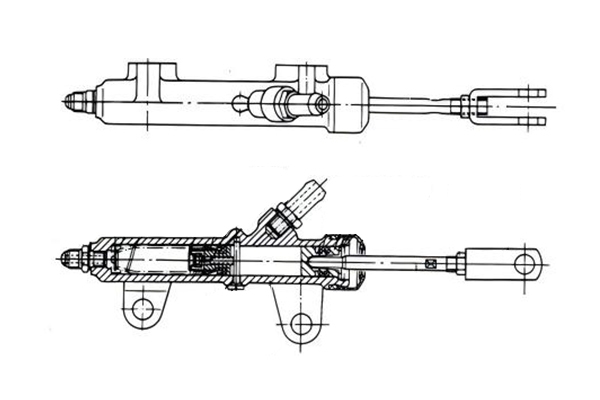
The clutch Master Cylinder is mainly composed of push rod, piston, hydraulic pipeline, return spring and other components. Among them, the push rod is connected to the clutch pedal, and the piston is connected to the clutch Slave Cylinder through the hydraulic pipeline.
When the driver steps on the clutch pedal, the push rod pushes the piston to move, increasing the oil pressure in the hydraulic pipeline, and then pushing the clutch Slave Cylinder to work and realize the separation of the clutch. When the driver releases the clutch pedal, the return spring pushes the piston and push rod back to their original position, and the clutch is re-engaged.
- Pressure generation: The clutch Master Cylinder is usually located below the clutch pedal. When the driver steps on the clutch pedal, the push rod behind the pedal pushes the piston in the Master Cylinder.
- Pressure transmission: The movement of the piston causes the liquid (or gas, depending on the system type) in the Master Cylinder to be compressed, generating pressure. This pressure is transmitted to the clutch Slave Cylinder through the oil pipe (or air pipe).
- Application of Pascal’s Law: The Master Cylinder clutch uses Pascal’s Law, which states that when a liquid in a closed container is subjected to an external force, the pressure is instantly transmitted to all parts of the liquid. Therefore, the pressure generated by the Master Cylinder can be quickly transmitted to the Slave Cylinder.
Clutch Slave Cylinder
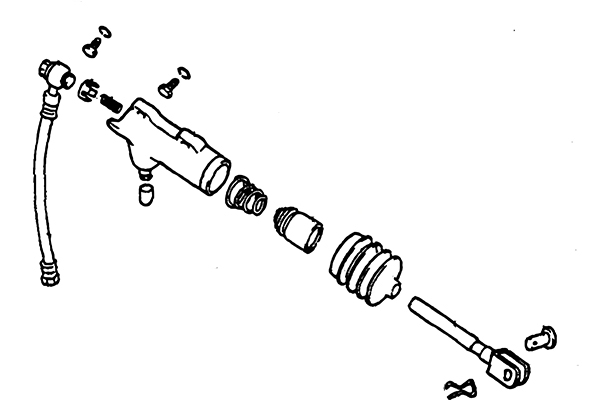
The clutch Slave Cylinder consists of the Slave Cylinder body and related parts (such as leather cups, springs, pistons, etc.).
When the driver presses the clutch pedal, the piston of the clutch Master Cylinder moves. The pressure generated is transmitted to the clutch Slave Cylinder through the pipeline by the hydraulic oil. The Slave Cylinder receives the hydraulic oil transmitted from the Master Cylinder through the oil inlet. The pressure generated by the leather cup seal pushes the piston out and moves toward the clutch release bearing, thereby cutting off the power transmitted from the engine to the gearbox.
- Receiving pressure: After the Slave Cylinder receives the pressure from the Master Cylinder, the piston or similar mechanism inside it will be pushed.
- Operation of the release mechanism: The movement of the Slave Cylinder piston will drive the release fork (or similar mechanism), and the release fork will then push the release bearing forward to separate the clutch pressure plate from the clutch plate.
- Return mechanism: When the driver releases the clutch pedal, the pressure in the Master Cylinder is released, and the piston in the Slave Cylinder returns to its initial position under the action of the return spring. The release fork and release bearing also return to their original positions, and the clutch pressure plate contacts the clutch plate again, thus achieving clutch engagement.